One batch per season
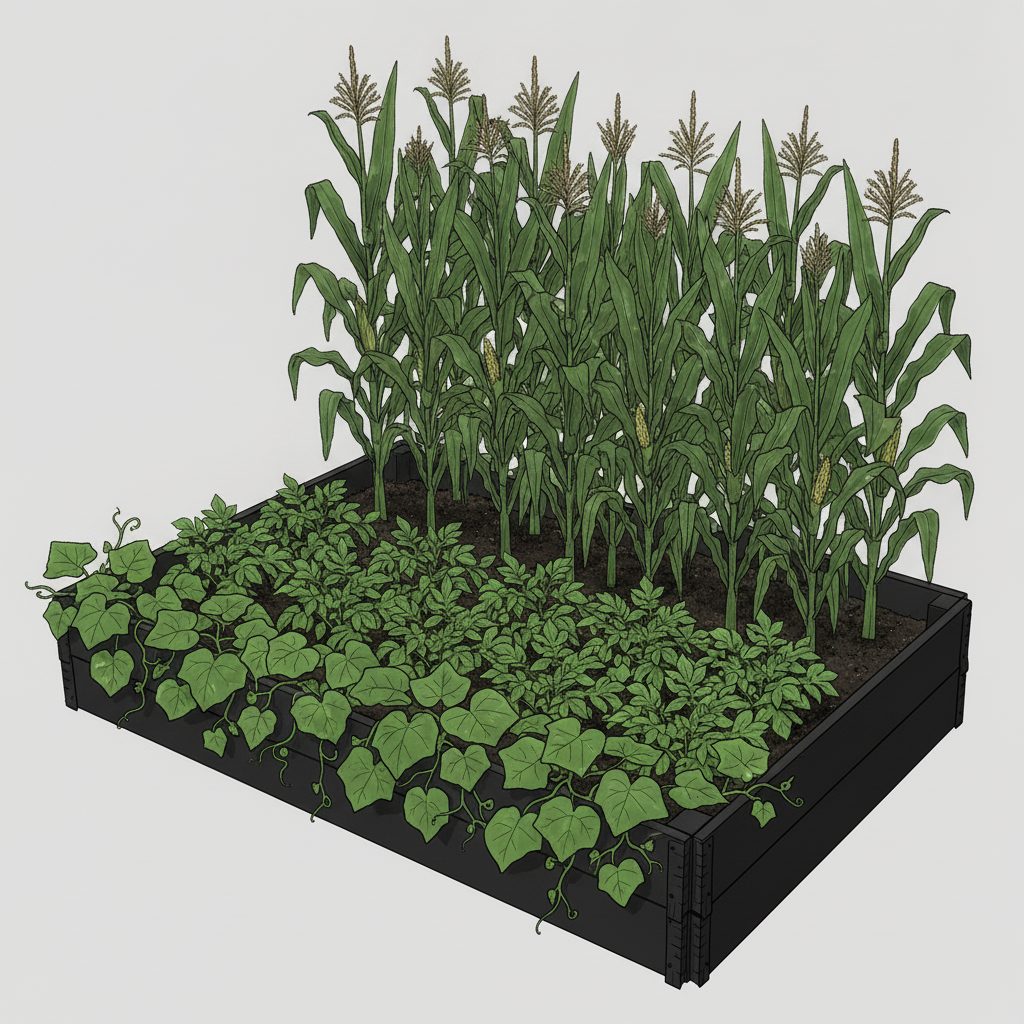
Outdoor cucumber + Sweet corn
Outdoor cucumbers climb and shelter between the corn rows.
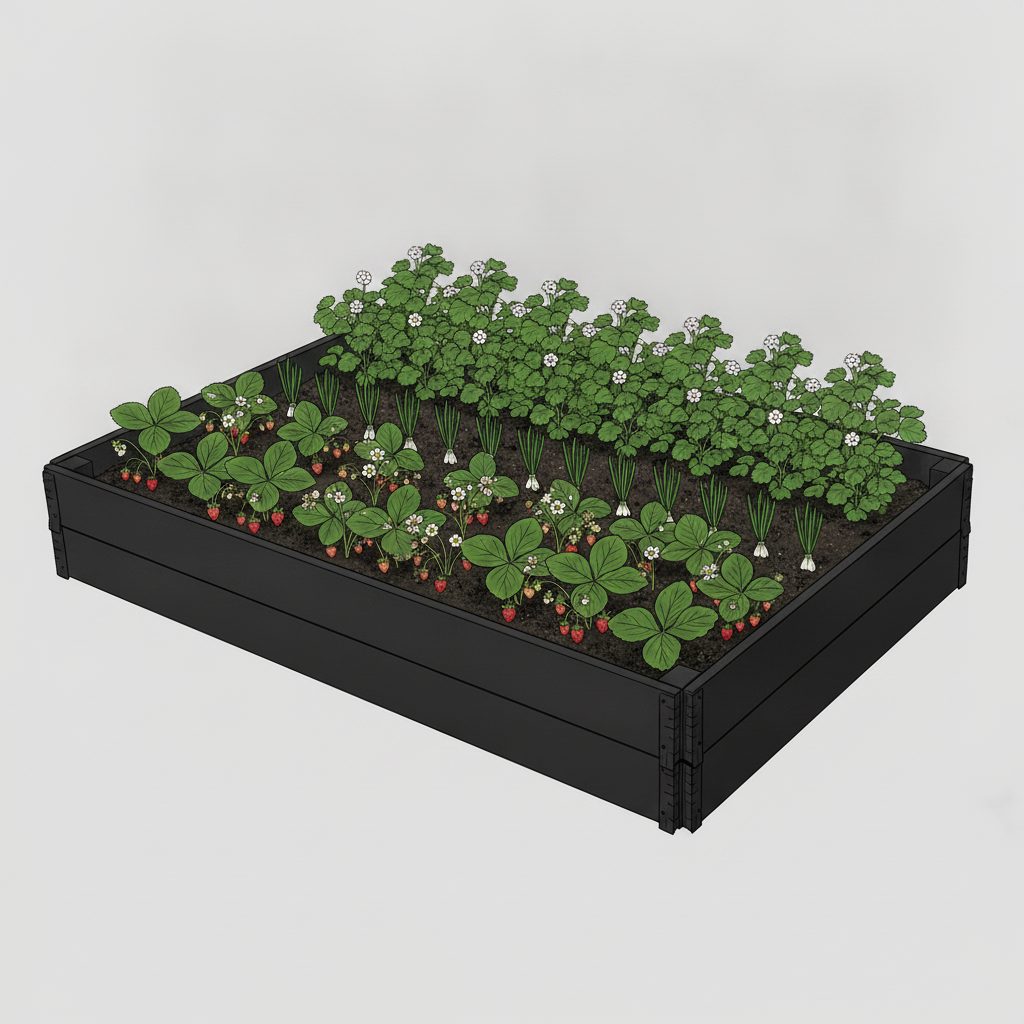
Strawberries + Arctic bramble + Yellow onion (from seed)
One of the hidden gems among the pairings — the onions confuse the pests, the bramble covers the ground, and everything in the bed is edible.
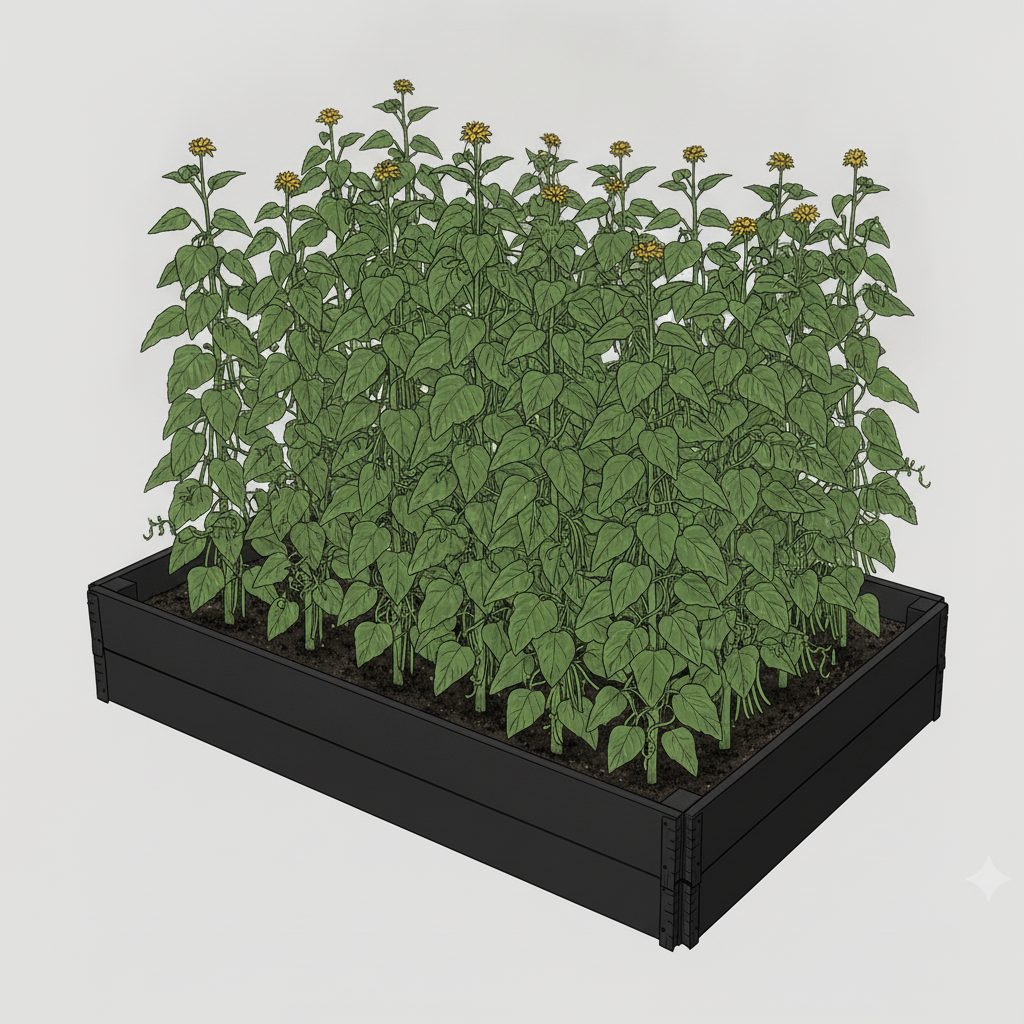
Jerusalem artichokes + Pole beans
One of the few single-round beds of the season: the artichokes take their time, and the beans use the tall stalks as a free trellis. Climbing Longbean Red Noodle was the bean that year.
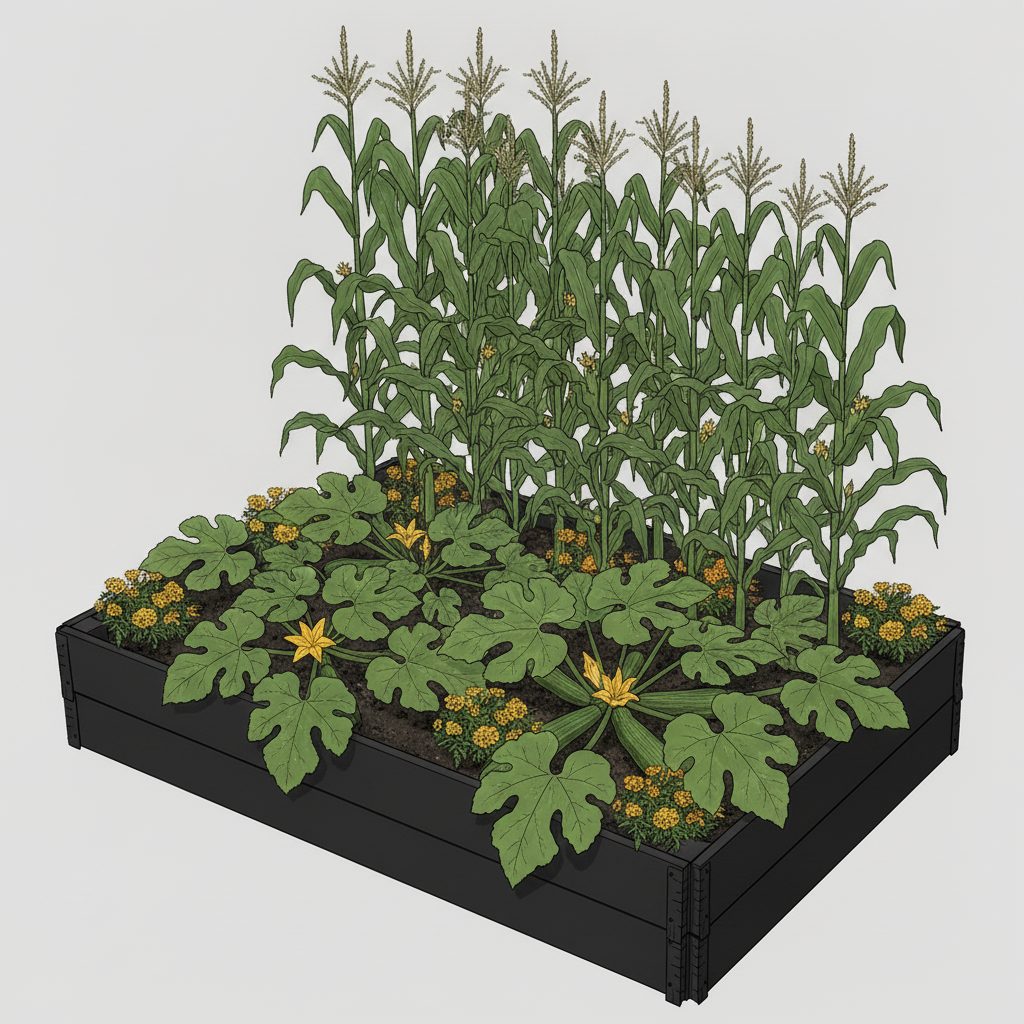
Sweet corn + Marigold + Zucchini
A simple, beautiful trio: corn brings the height, zucchini keeps the soil covered and moist, marigold pulls in the pollinators and keeps some pests guessing. Close cousin of the plain corn + zucchini bed.
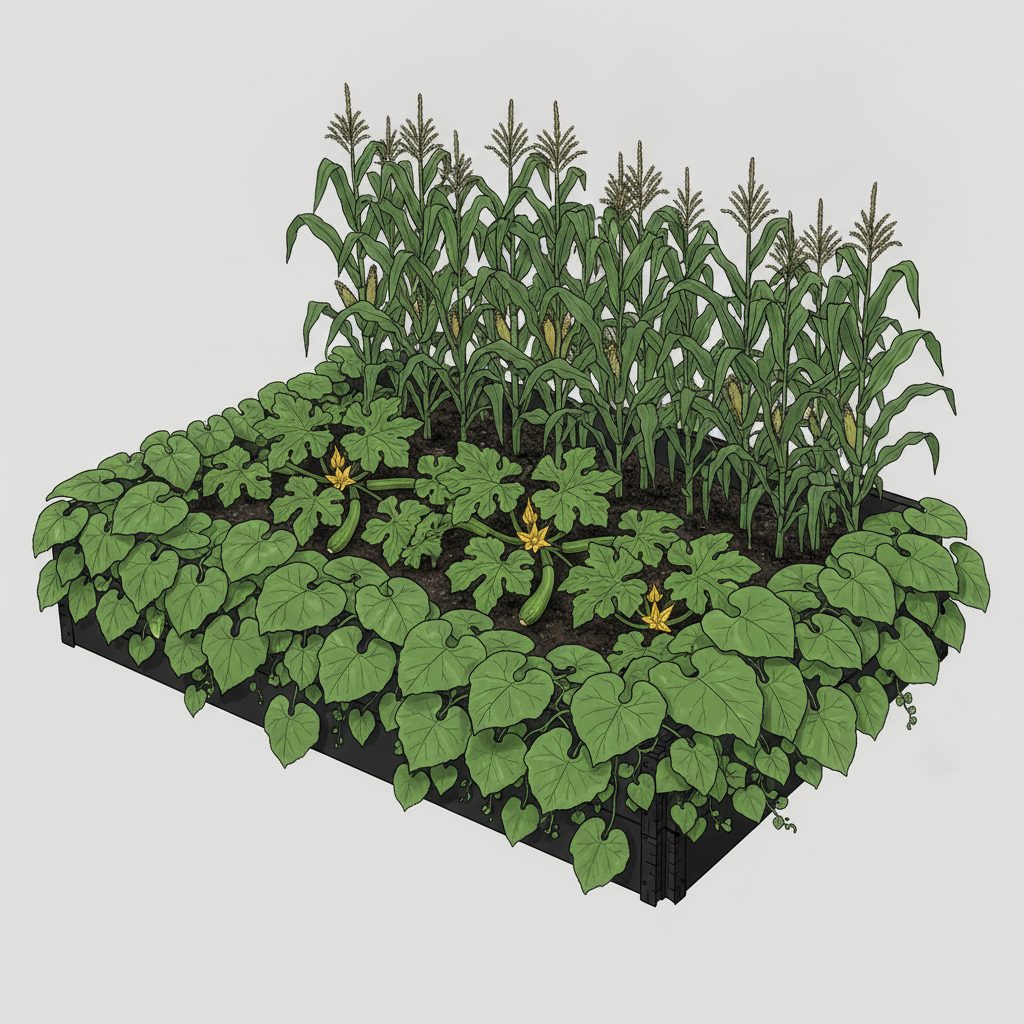
Sweet corn + Zucchini + Pumpkin
Corn gives height, zucchini and pumpkin cover the ground and keep the weeds down. A classic three-sisters variation without the beans.
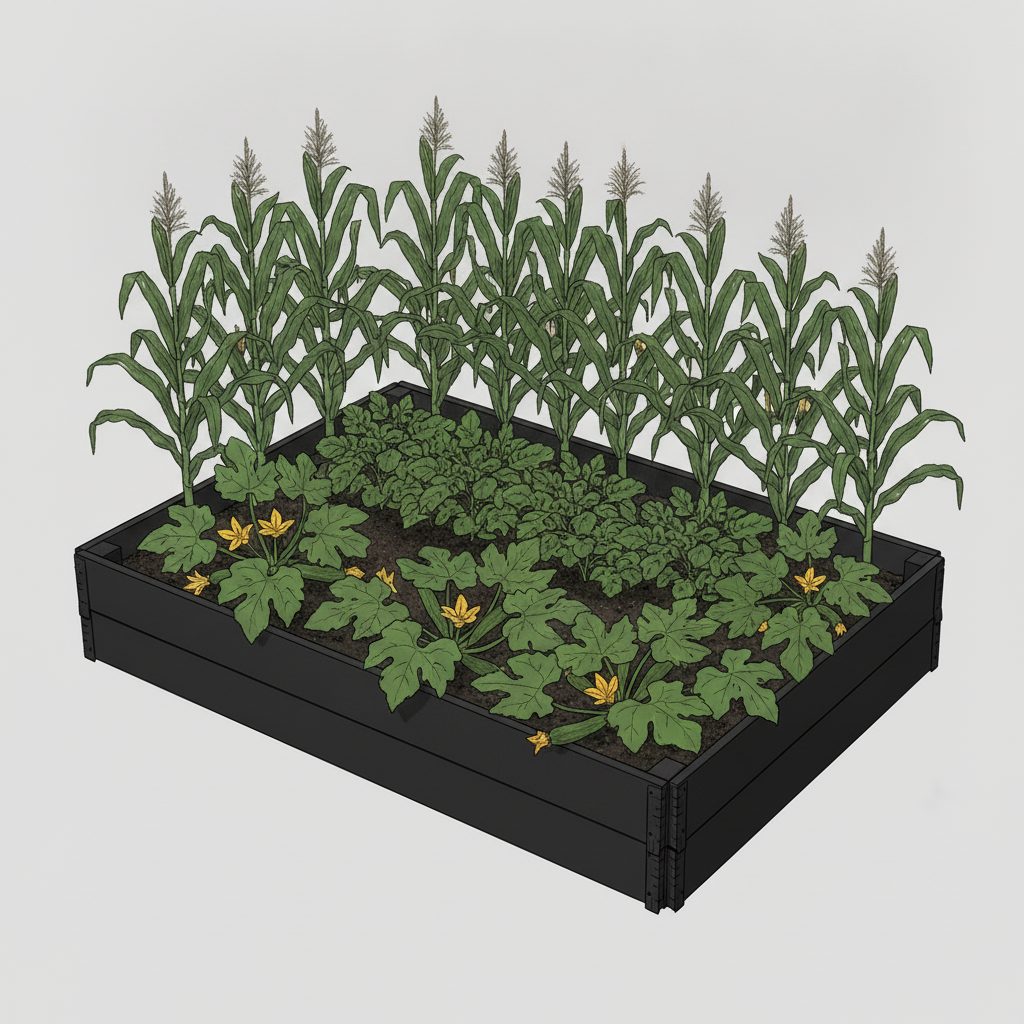
Sweet corn + Zucchini
Fast version of the corn guild for a smaller bed.
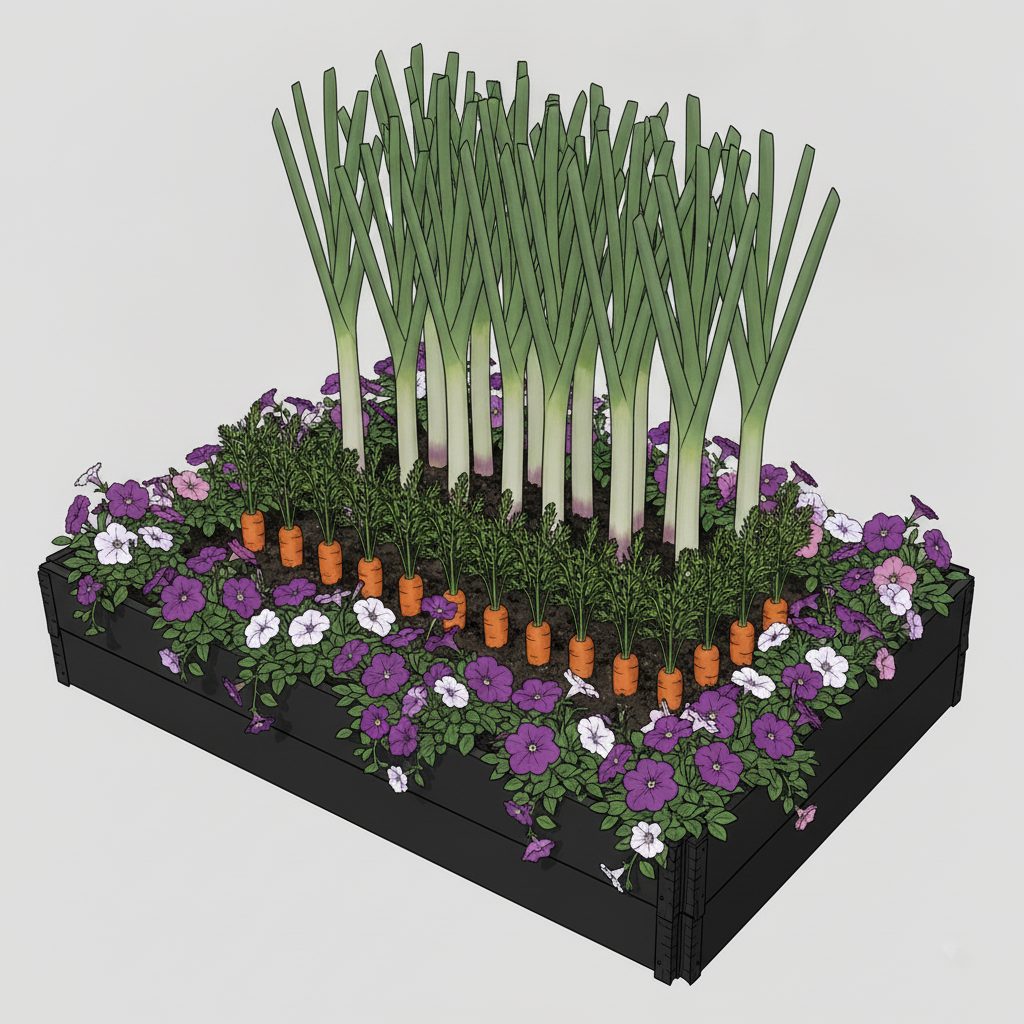
Summer carrot + Leek + Petunia
A favourite trio where every plant has a job: the carrot works underground, the leek stands guard against the carrot fly, and the petunia covers the soil and looks after the looks.
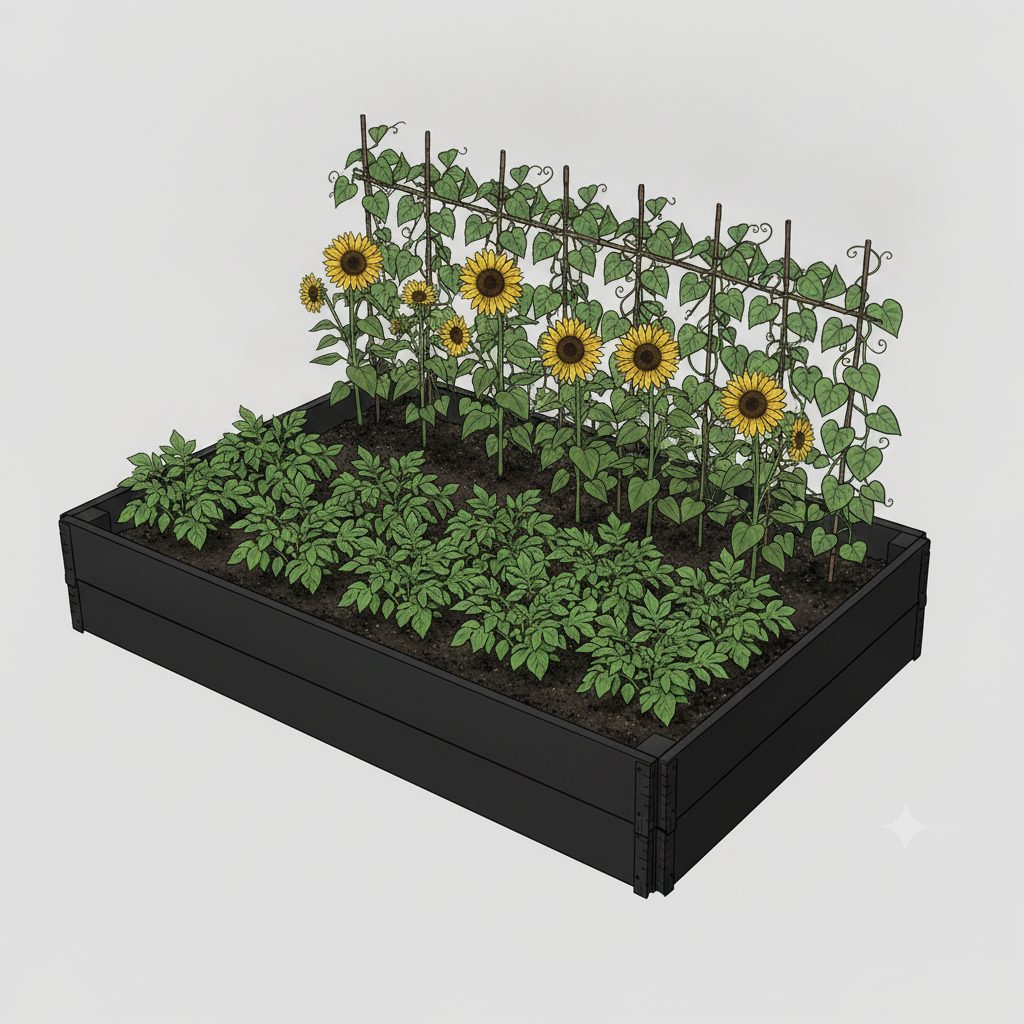
Potatoes + Sunflowers + Beans
An experiment in a block of three 9.6 m rows. Low sunflower varieties only — the beds are 70 cm high, so tall ones would be absurd. Written up as a draft that never got published.. until now.
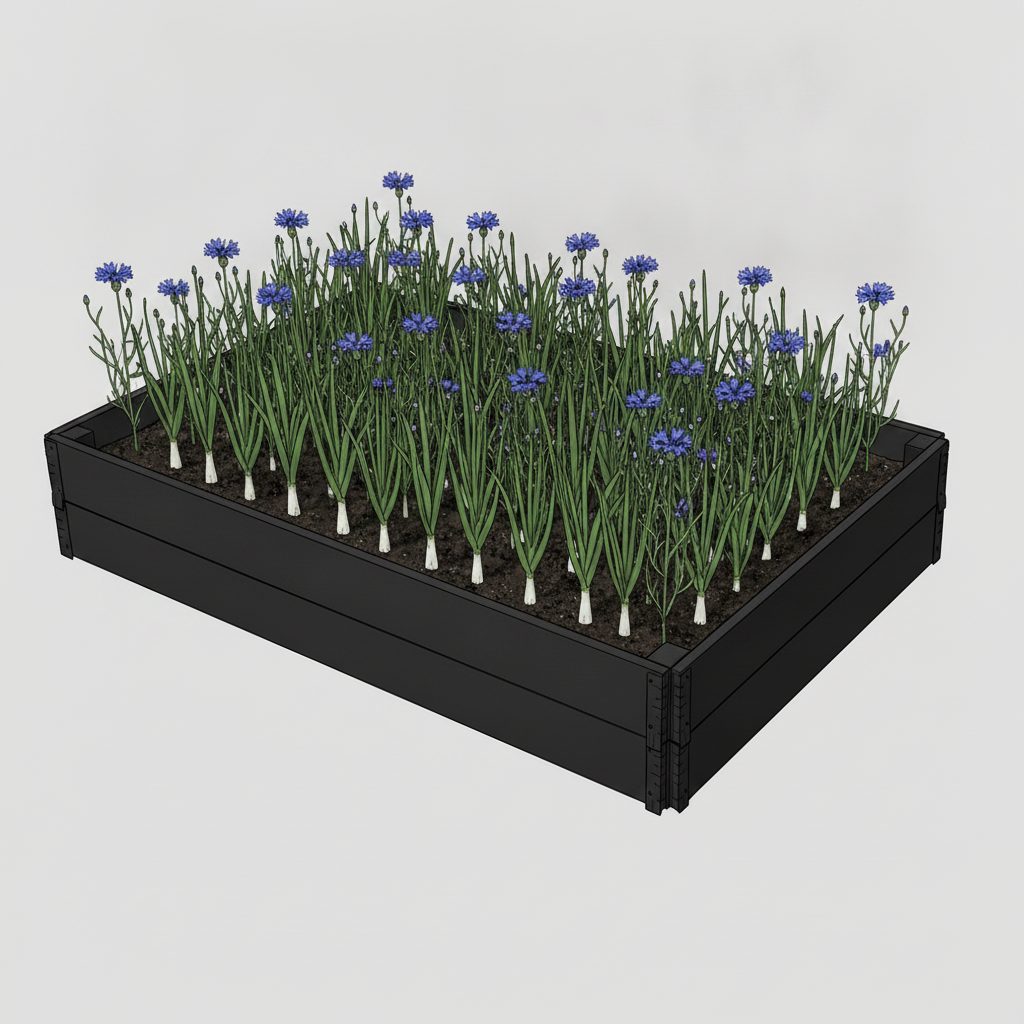
Leek + Cornflower
An unexpected harmony discovered by accident: cornflower seeds sown straight into the leek row at transplanting time. The leeks stand guard, the cornflowers bring the bees.
coming
Kale + Marigold
coming
Sweet Corn + Zucchini + Snapdragon
coming
Sugar Snap Peas + Aubergine
coming
Red onion + Autumn carrot
coming
Chilli + Marigold + Basil
coming
Radishes + Spinach + Arugula
coming
Beans + Cucumber
Cucumber climbs while beans fix nitrogen at its feet — an easy, productive pairing for one bed.
coming
Potatoes + Nasturtium
Nasturtium sprawls as living mulch between the potato rows and is said to keep some pests guessing.
coming
Kale + Cosmos + Sweet William
Kale does the practical work while cosmos and sweet william turn the same bed into the prettiest spot in the garden.
Two batches per season
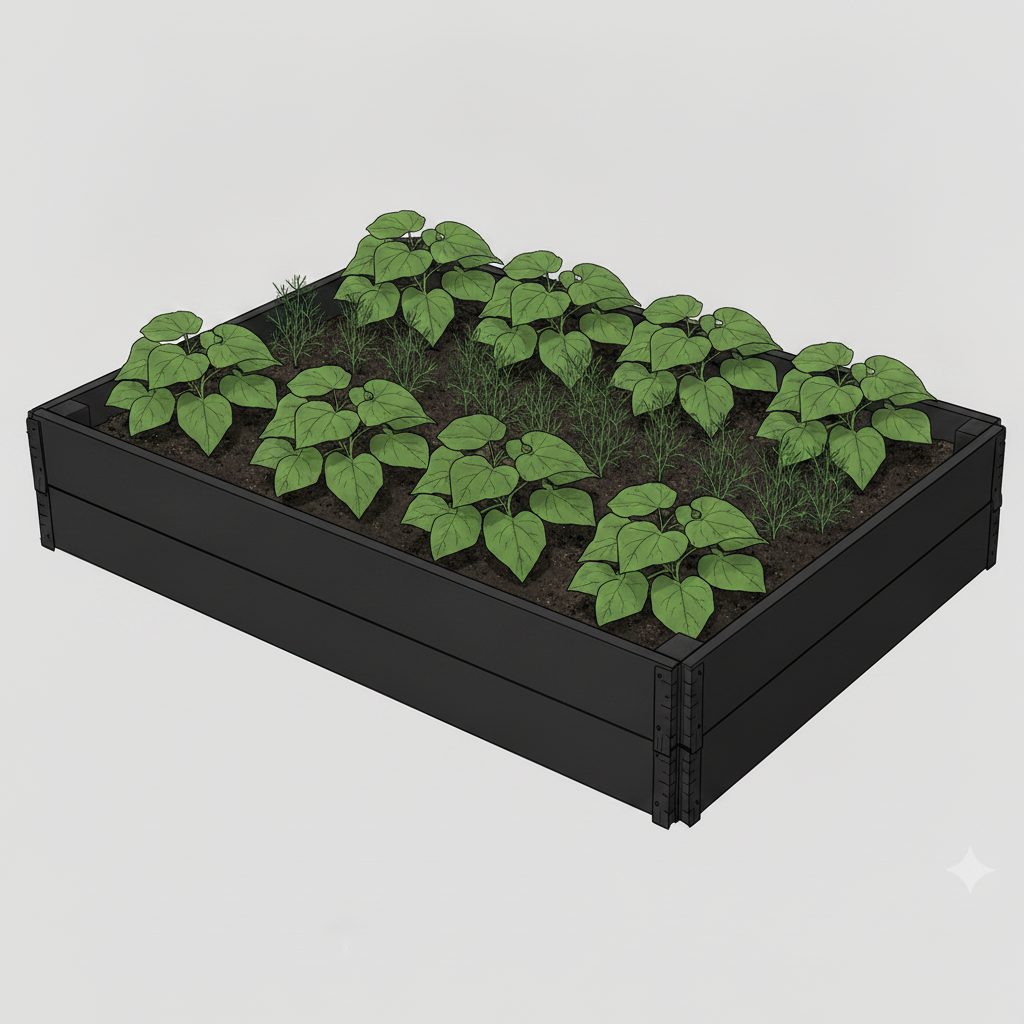
Outdoor cucumber + Dill + Pak choi
An early experiment across two beds with glass and plastic frames as cold protection: winter-sown pak choi first, then outdoor cucumbers with dill in between.
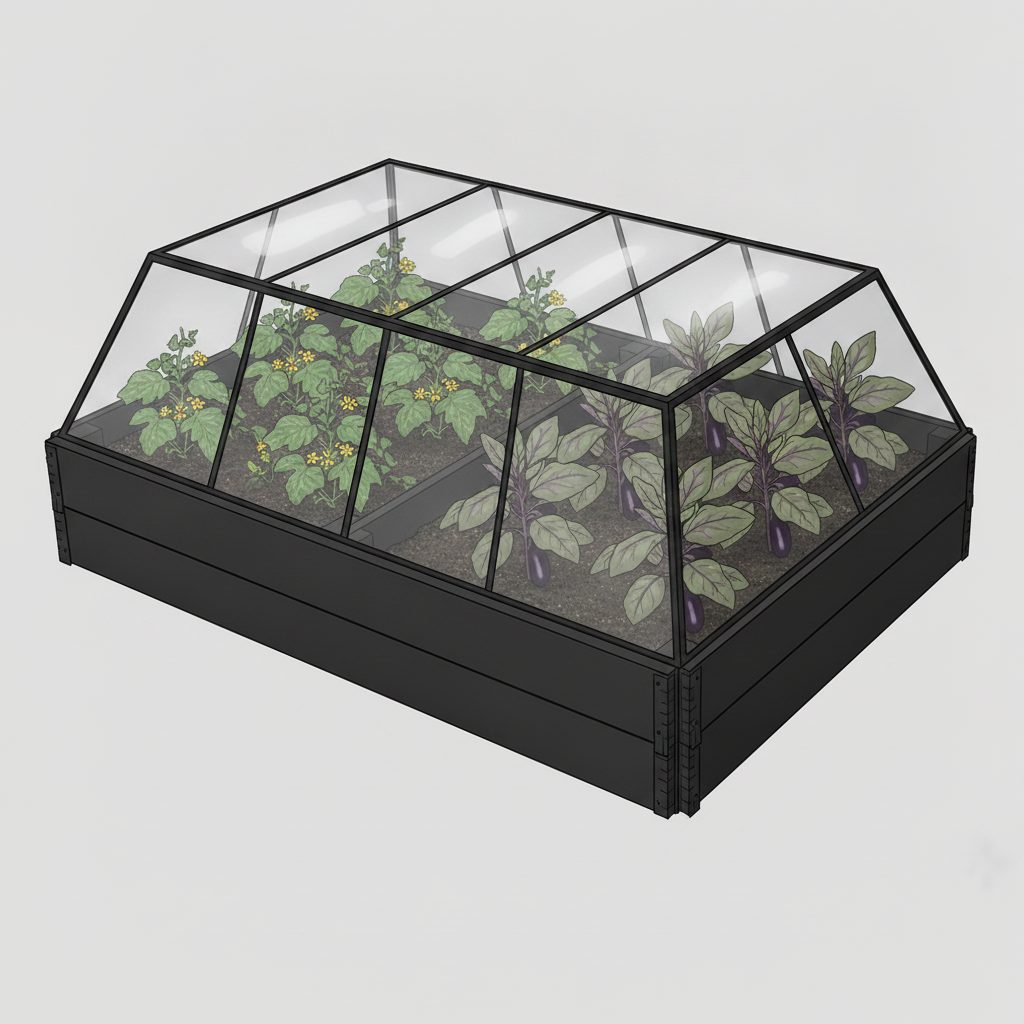
Pak choi + Melon + Aubergine
An experiment: growing melon and aubergine in a raised bed without a greenhouse, using frames for the extra heat. Early pak choi got the bed started before the heat-lovers moved in.
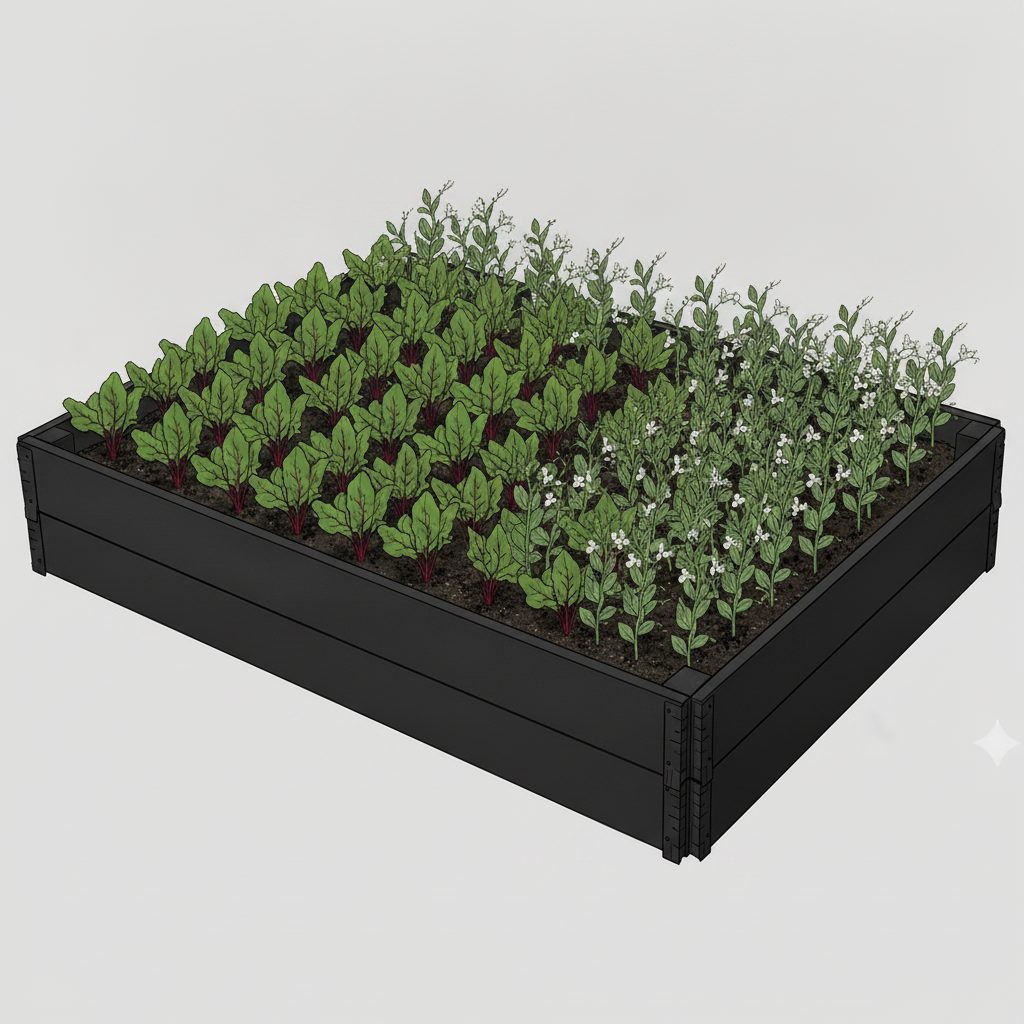
Beetroot + Sugar snap peas + Spinach
A bed in the Enrichers with a twist quarter, planned for three harvests in one season — the peas feed the soil while the beetroot fills the rows.
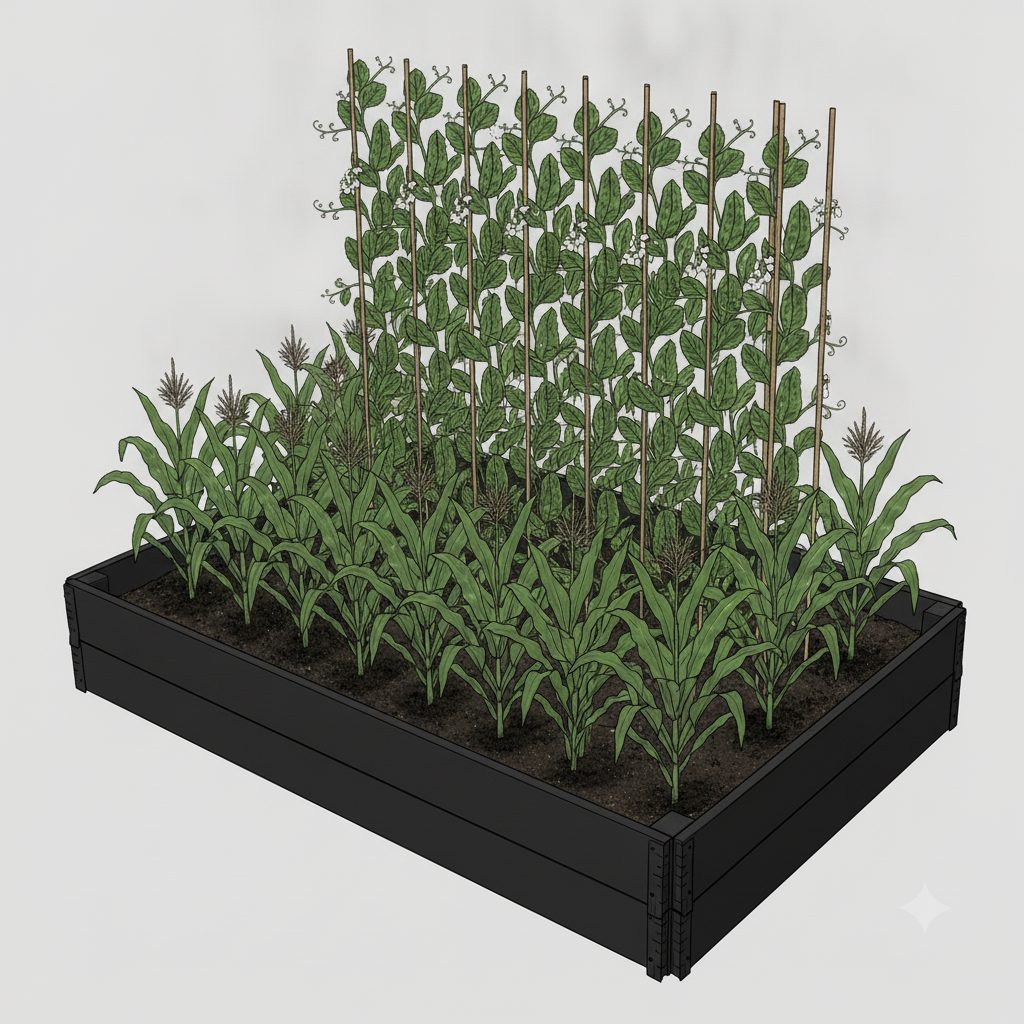
Sugar snap peas + Sweet corn + Spinach
A two-harvest bed in the Enrichers with a twist quarter: two rounds of peas alongside the corn, then autumn spinach to close the season.
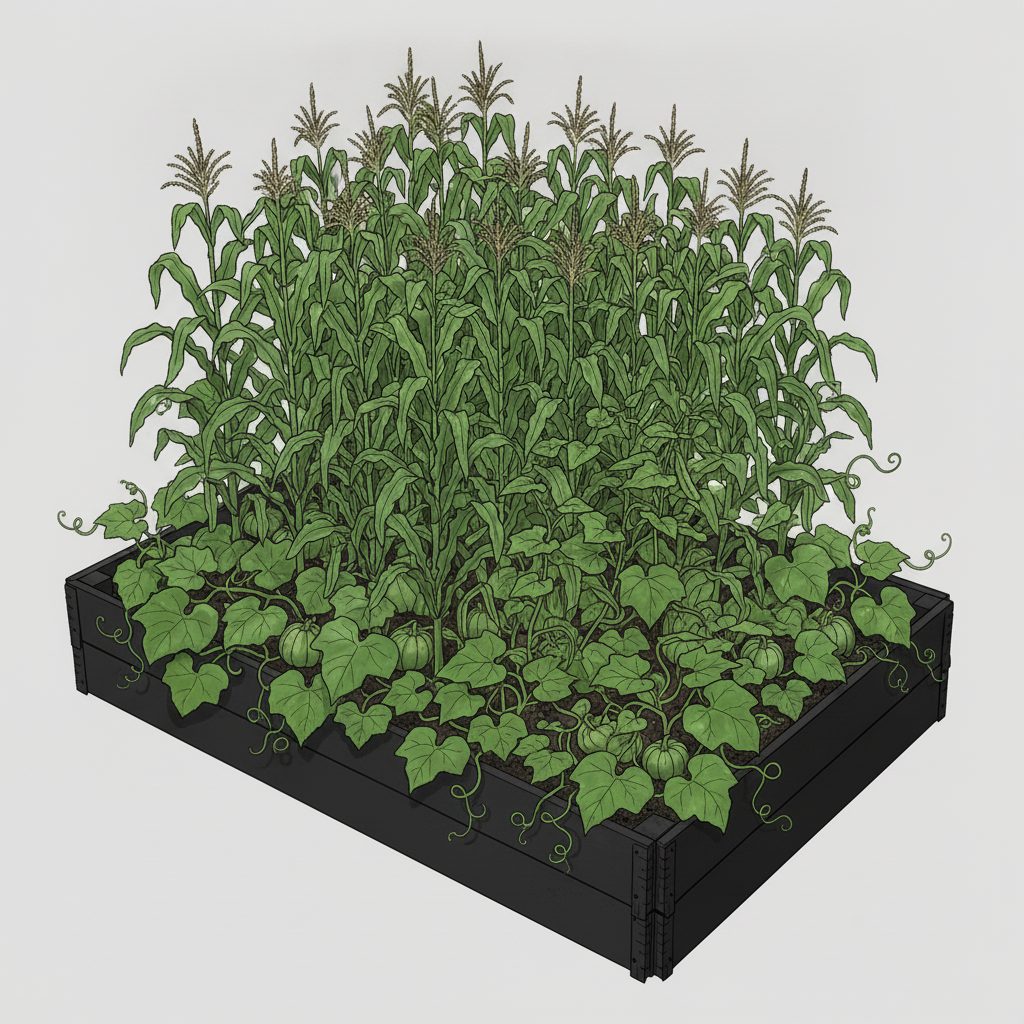
Spinach + Sweet corn + Beans + Pumpkin
The classic Three Sisters as the mid-season crop, framed by spinach before and after: corn carries the beans, the beans feed the soil, the pumpkin keeps it covered. Bean of the year: Yin Yang. Tried the season before with good results.
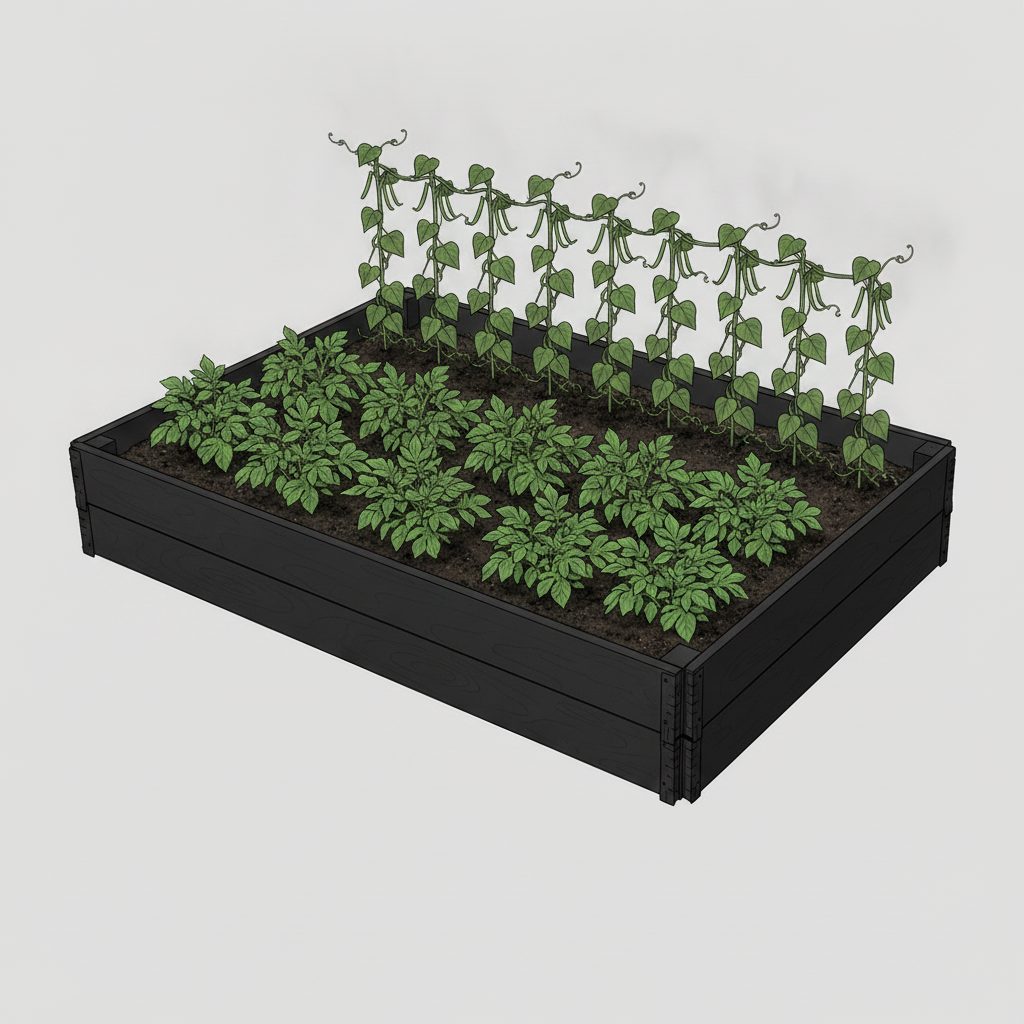
Spinach + Potatoes + Beans + Swiss chard
Potatoes are the backbone, growing May to September — which leaves room for spinach before (winter-sown) and Swiss chard after. Borlotti was the bean that year.
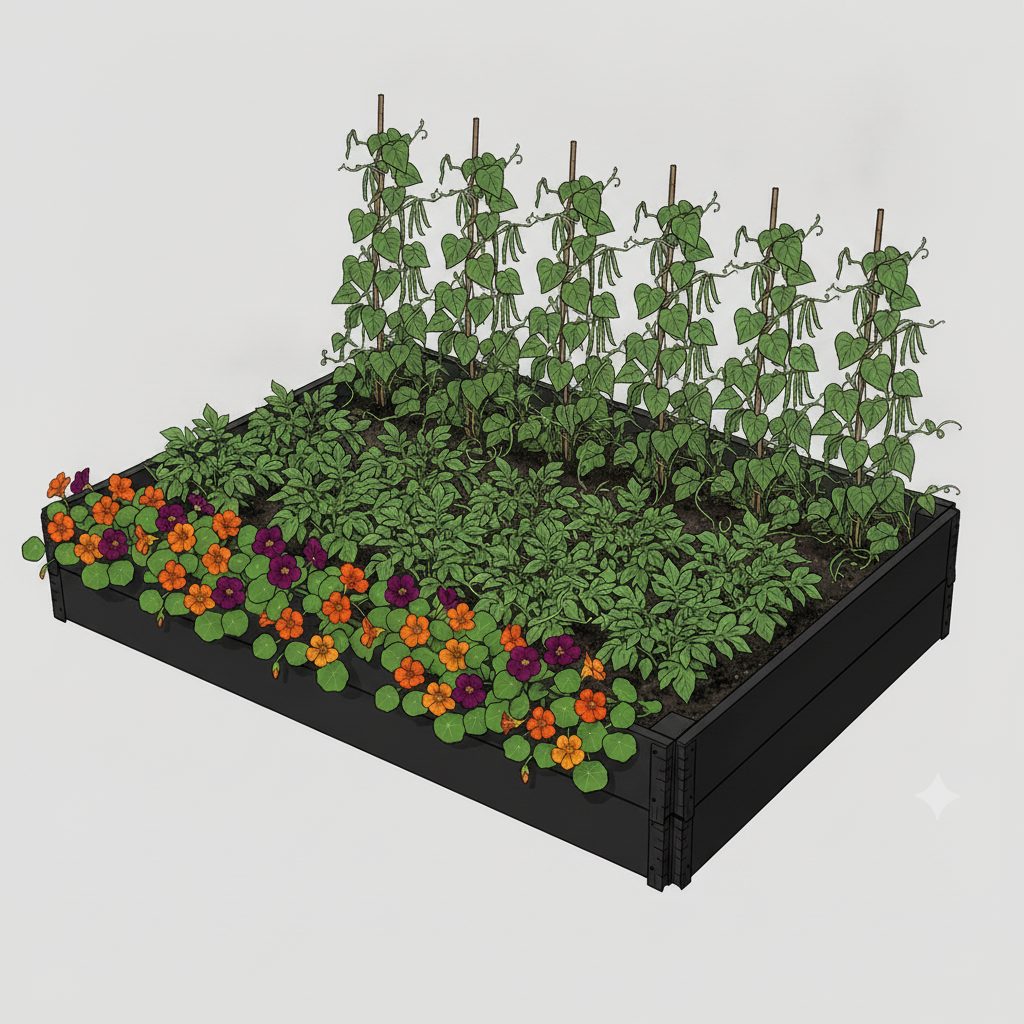
Spinach + Potatoes + Beans + Pak choi
A near-twin of the potato + chard bed, but with pak choi as the autumn crop instead.
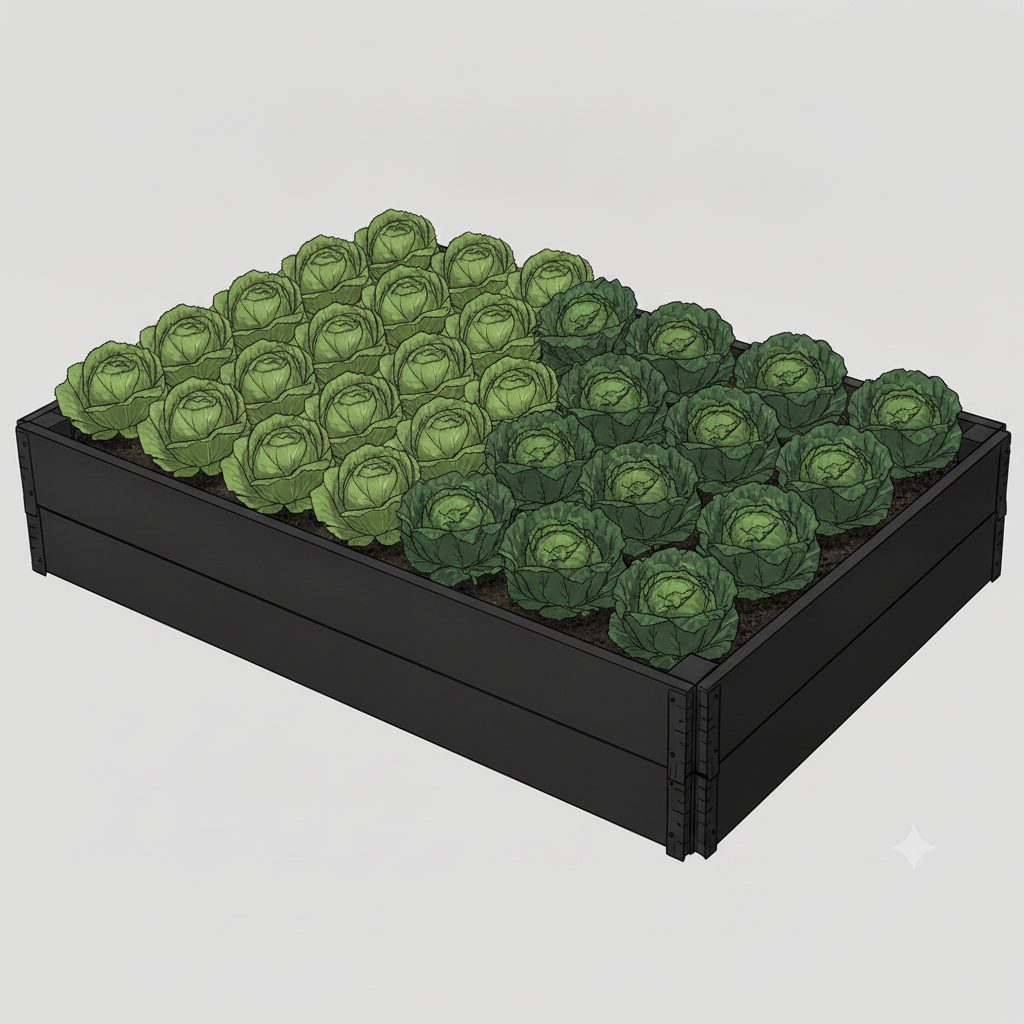
Spinach + Lettuce + Pointed cabbage + Savoy cabbage
A two-harvest bed: quick, cold-hardy spinach and lettuce as the winter-sown first round, then the cabbages take over for the long haul.
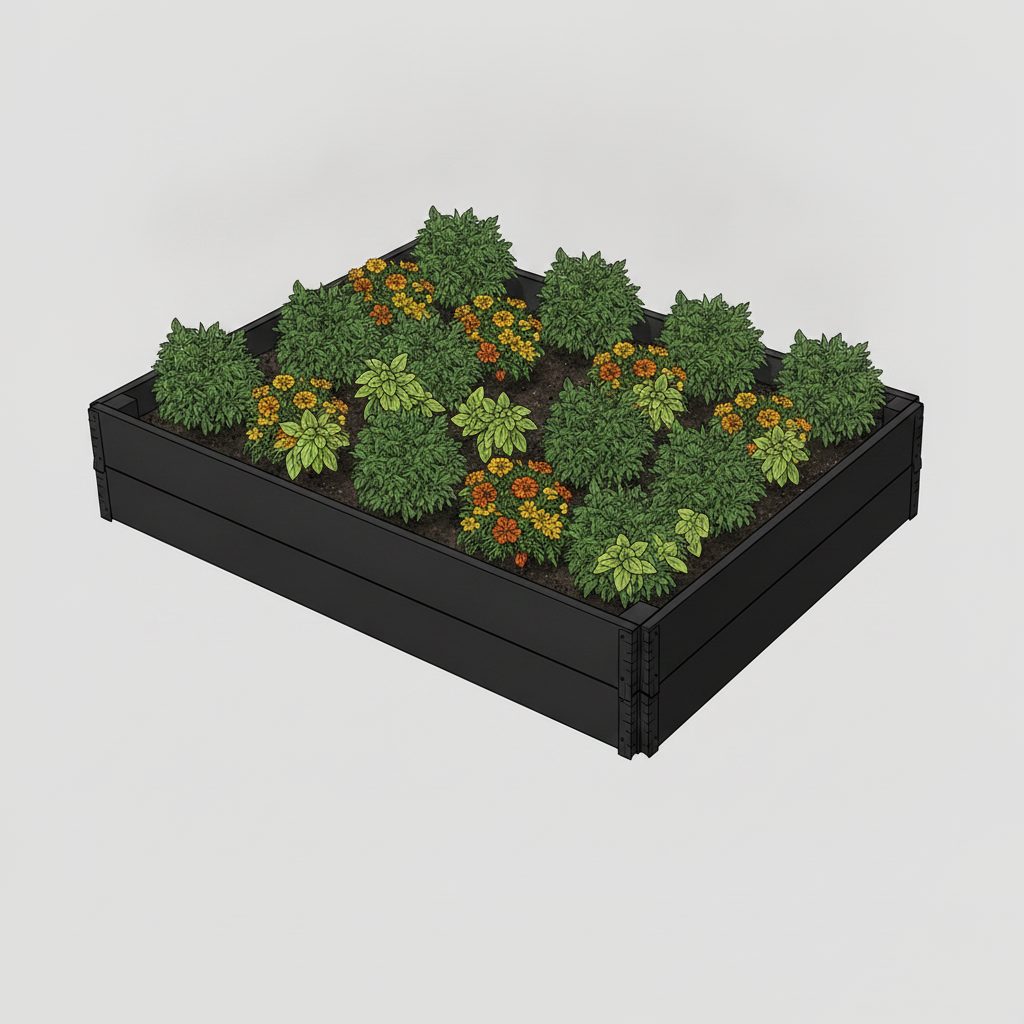
Tomatoes + Marigold + Basil + Pak choi
A bed built around outdoor tomatoes: an early round of Asian leaves first, then bush tomatoes with their classic companions marigold and basil.
coming