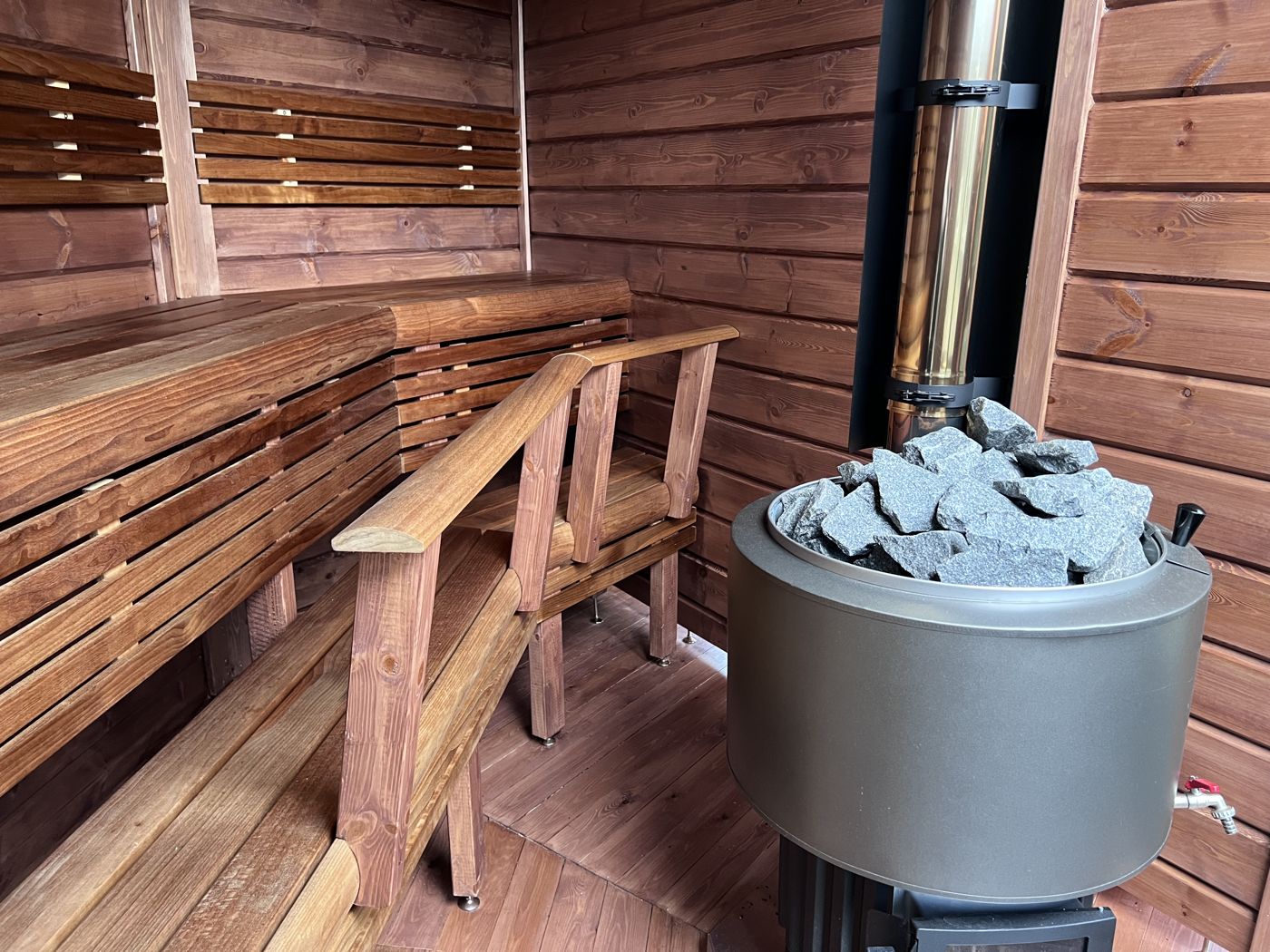
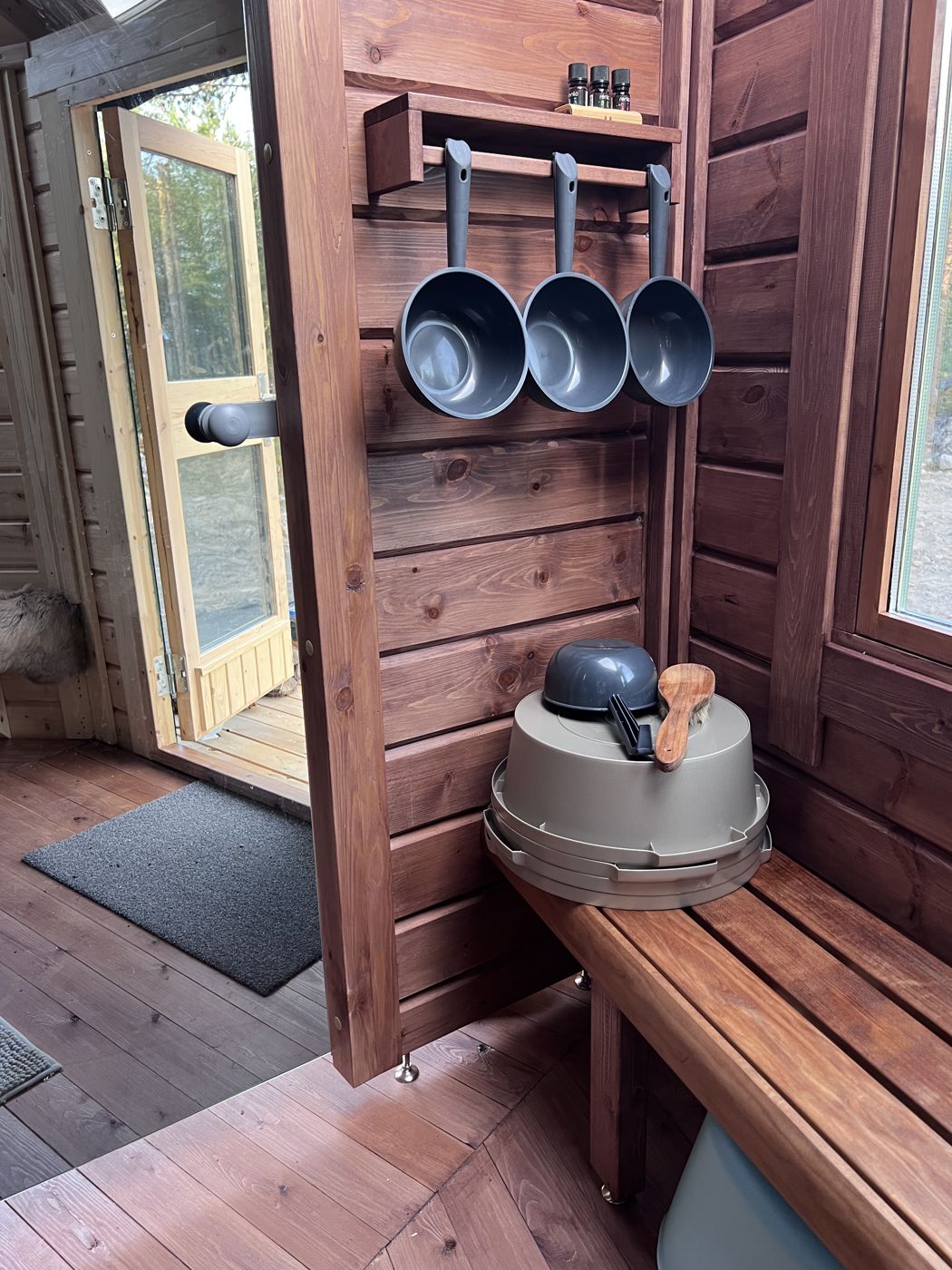
A closer look now at the fittings that make this sauna actually livable day to day, rather than just a beautiful room to sit in.
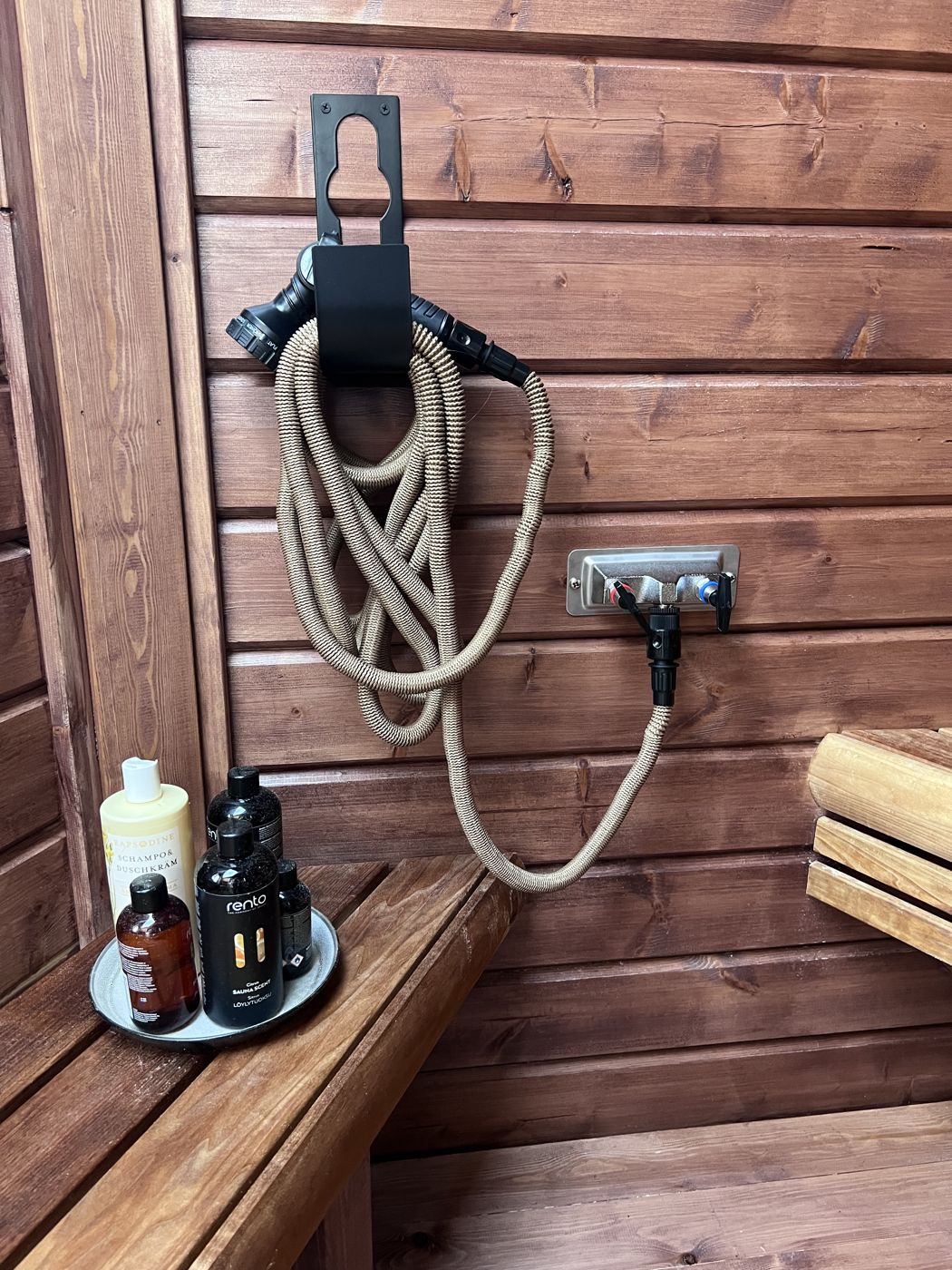
Most saunas don’t bother with a proper mixer tap — usually it’s cold water only, maybe a bucket you fill and carry. We chose to install one with both hot and cold anyway, which isn’t the norm.
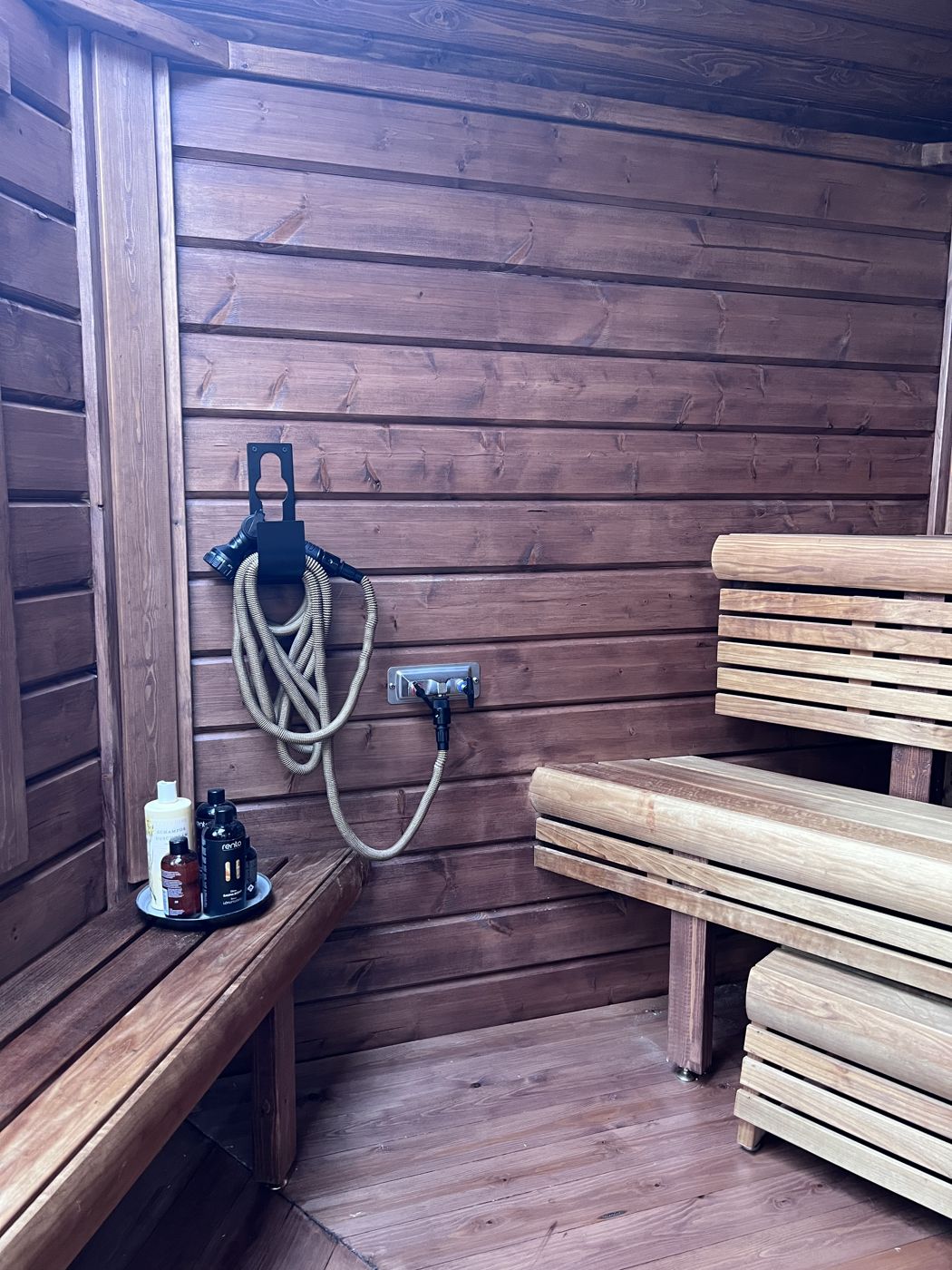
It’s not that the water-jacketed stove is what gives us hot water at the tap — we actually chose to have both. There’s hot water from the stove itself when it’s burning, and separately, hot water at the tap year-round, heated by its own water heater. The point of having both is being able to take a quick hot shower in the sauna even on days we haven’t lit the fire — after a workout, say, or a morning run.
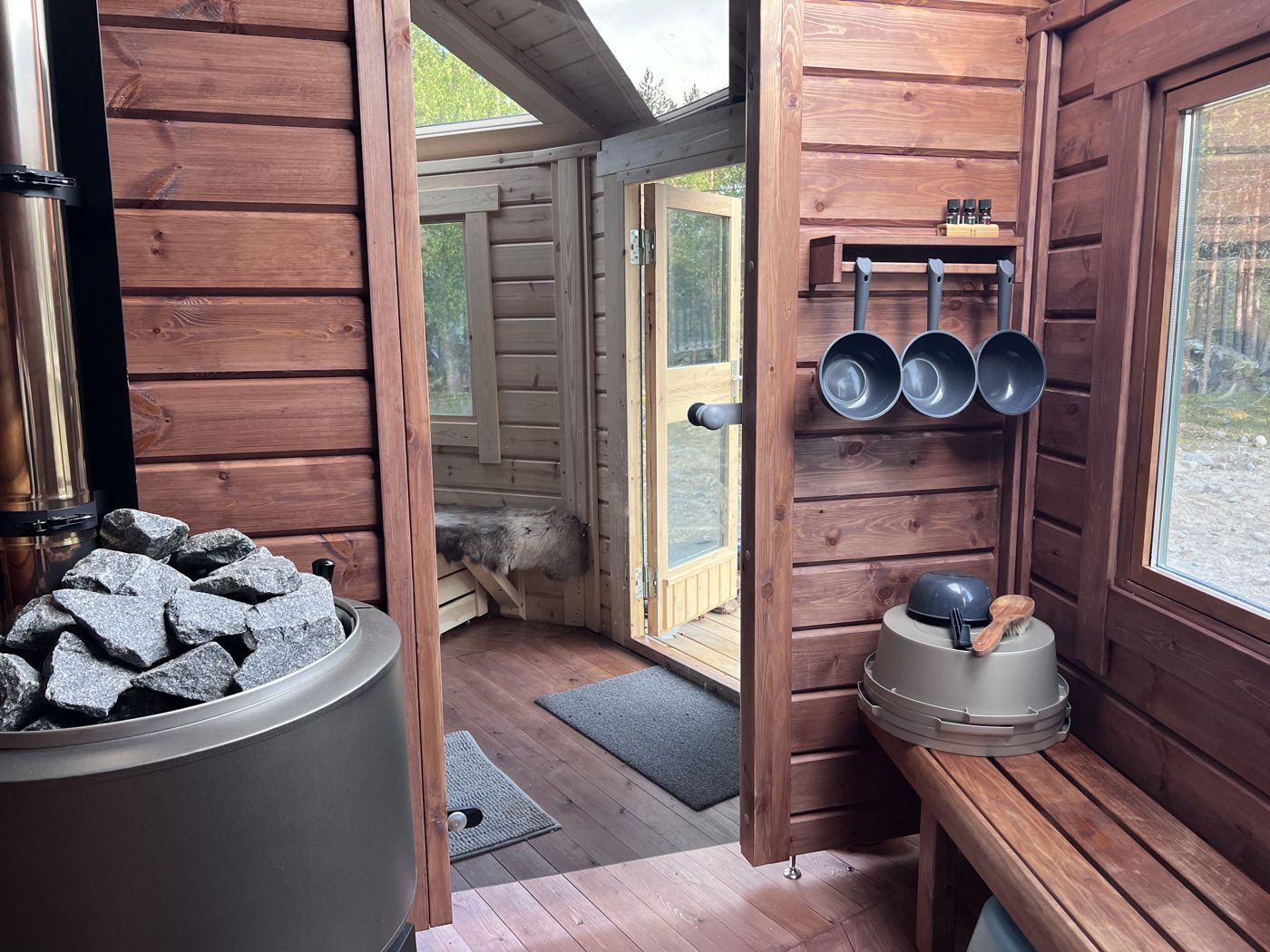
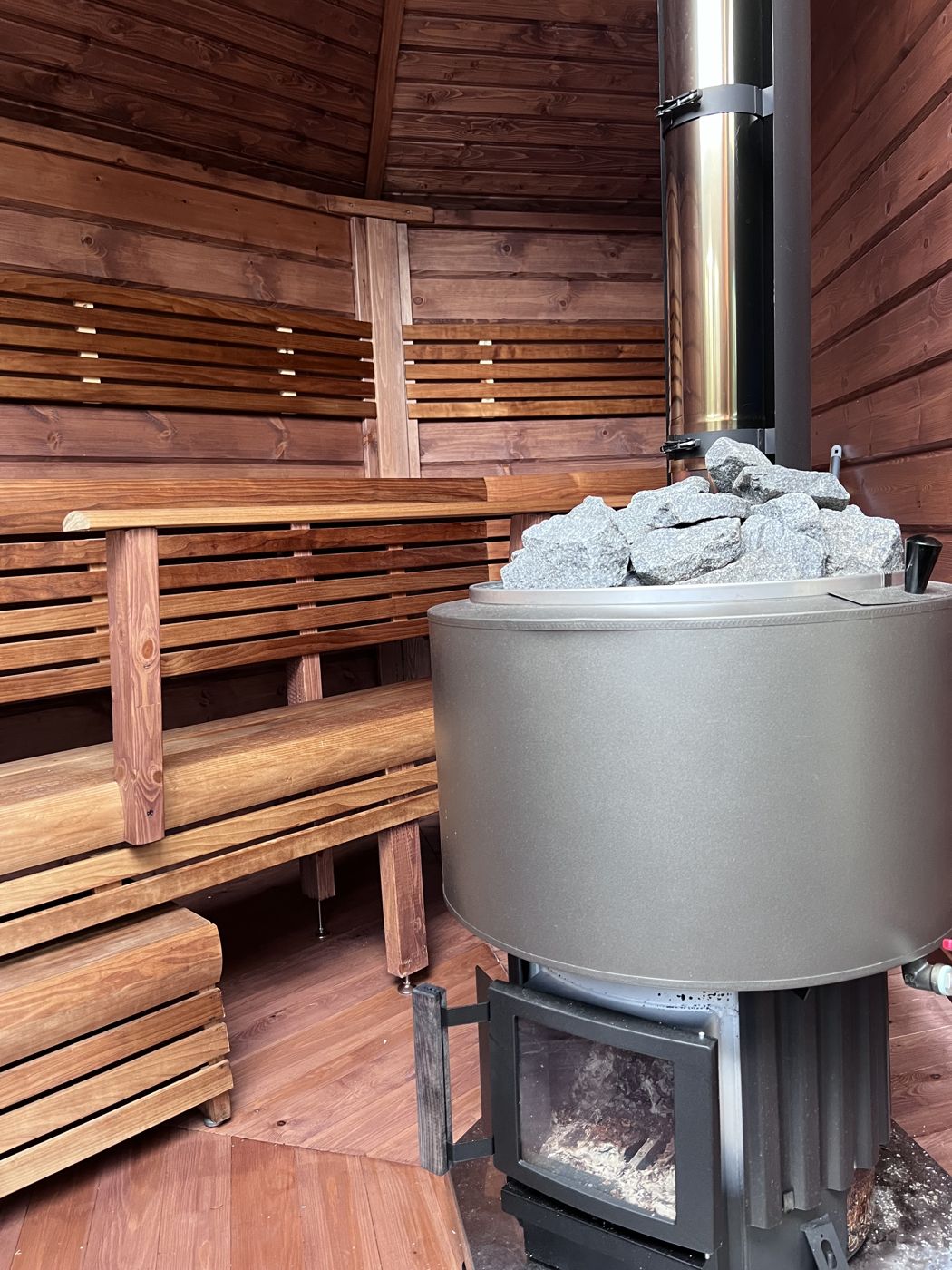
The plumbing and the water heater itself live outside, in a small utility space built onto the sauna’s exterior wall and separately insulated, so we could keep pipes and a tank out of the sauna room altogether.